
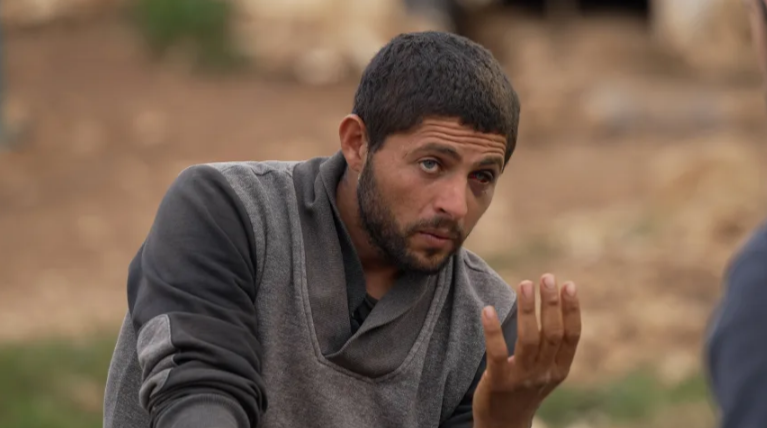
Dozens of masked Israeli settlers stormed into Qusai Abu al-Kebash’s small village last weekend in the middle of the night.
They grabbed Abu al-Kebash, bound him by his hands and legs and stripped him. He says they then zip-tied his genitals and paraded him through his community while beating him.
Israeli settlers have increasingly used violence against Palestinians in a bid to drive them from their homes in the occupied West Bank. But sexual assault appears to be a new weapon in these settlers’ arsenal of intimidation, pointing to a troubling new level of violence.
“They cut my belt off with a knife, as well as my boxers. They zip-tied my penis, tightened it and then dragged me all around the village,” Abu al-Kebash said, speaking to CNN in his first on-camera interview.
“It was very, very painful. … I thought they were going to kill me.”

The 29-year-old continued: “I felt humiliated and insulted. Why would they do that to us? Why do they tie someone up like that?”
Several members of Abu al-Kebash’s family who were present at the time corroborated his account. So did two foreign activists — volunteers with the International Solidarity Movement — who told CNN they also witnessed Abu al-Kebash being sexually assaulted.
Israeli authorities are investigating the alleged assault and settlers’ alleged theft of hundreds of Abu al-Kebash’s sheep. He said police and investigators from the Shin Bet internal security service came to his village in the days following the incident and that he went to a police station to give his testimony.

Abu al-Kebash said he hasn’t been able to sleep since. His left eye remains bruised and bloody.
“I’m worried they’ll come back, that they’ll kill us in the middle of the night or burn our village like they said they would,” he said.
Settlers have sought to intimidate Abu al-Kebash and his family before, but not like this, he told CNN.
He said his wife, cousins and father were also zip-tied and beaten that same night. He recounted that the settlers poured water and dirt on them and threatened to rape the women, Abu al-Kebash and his relatives said. Settlers even hit the children, he said. Two foreign anti-occupation activists, who spoke to CNN on the condition of anonymity because they fear reprisals, said they were also bound and threatened.
The shepherd said he hopes police will bring his assailants to justice and return the sheep that are his livelihood.
But Palestinians have largely lost faith in Israeli investigations into settler violence, with few ever resulting in arrests, let alone convictions. Instead, Palestinians and anti-occupation activists describe a culture of impunity that pervades the Israeli settler community, with Israeli soldiers at times standing by as settlers intimidate, harass and even attack Palestinians.
In a joint statement, the Israel Police and IDF said an investigation is underway and that they “strongly condemn incidents of violence and crime.”
Israel has significantly escalated military activities in the occupied West Bank since 2023 as the right-wing government of Prime Minister Benjamin Netanyahu has pushed to increase Jewish settlements and entrench Israel’s grip on the land, with the goal of preventing the establishment of a Palestinian state.

Israeli settlement in the West Bank is considered illegal under international law.
Israeli settlers have also ramped up attacks on Palestinians and their properties, a near-daily occurrence. Violence has spiked once again amid the war with Iran. Nine Palestinians have been killed by Israeli soldiers or settlers in the West Bank and East Jerusalem since the war began, according to the Palestinian Ministry of Health. The Israeli human rights group B’Tselem has accused Israel of using the “cover of war with Iran” to accelerate further what it describes as the “ethnic cleansing” of the West Bank.
Despite the risks, Abu al-Kebash said he felt it was important to share his story.
“I’m sharing my story in its entirety so people can see — so the world can see what’s happening. We haven’t done anything to them, and yet they came and beat us and did this to us,” the shepherd said. “That is why I have the courage to speak.”